
木工
スウェーデン ウッドボウル
Sweden / 19th century
⌀23cm × H7.5cm
¥28,000 (税込)
Stock: 01
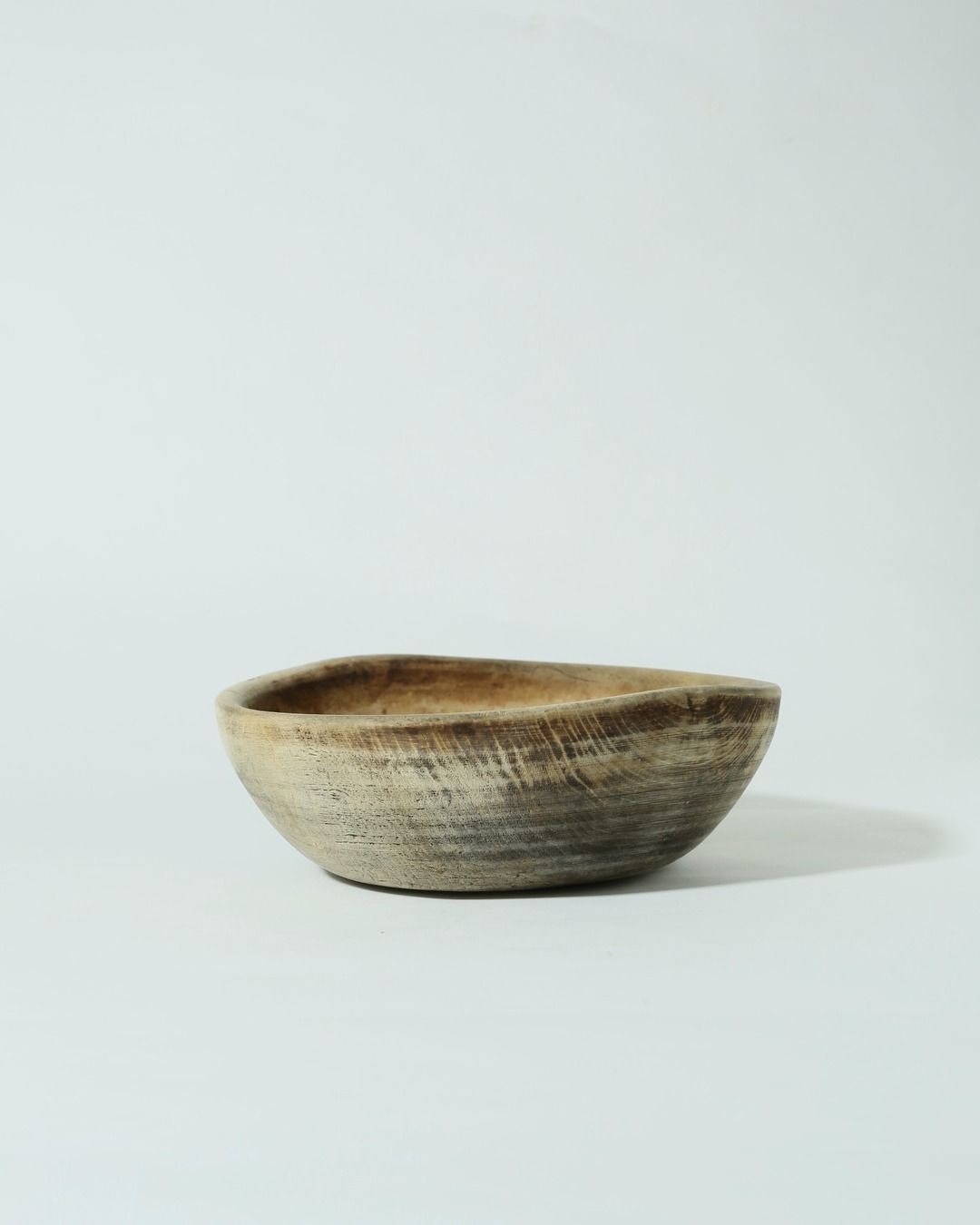
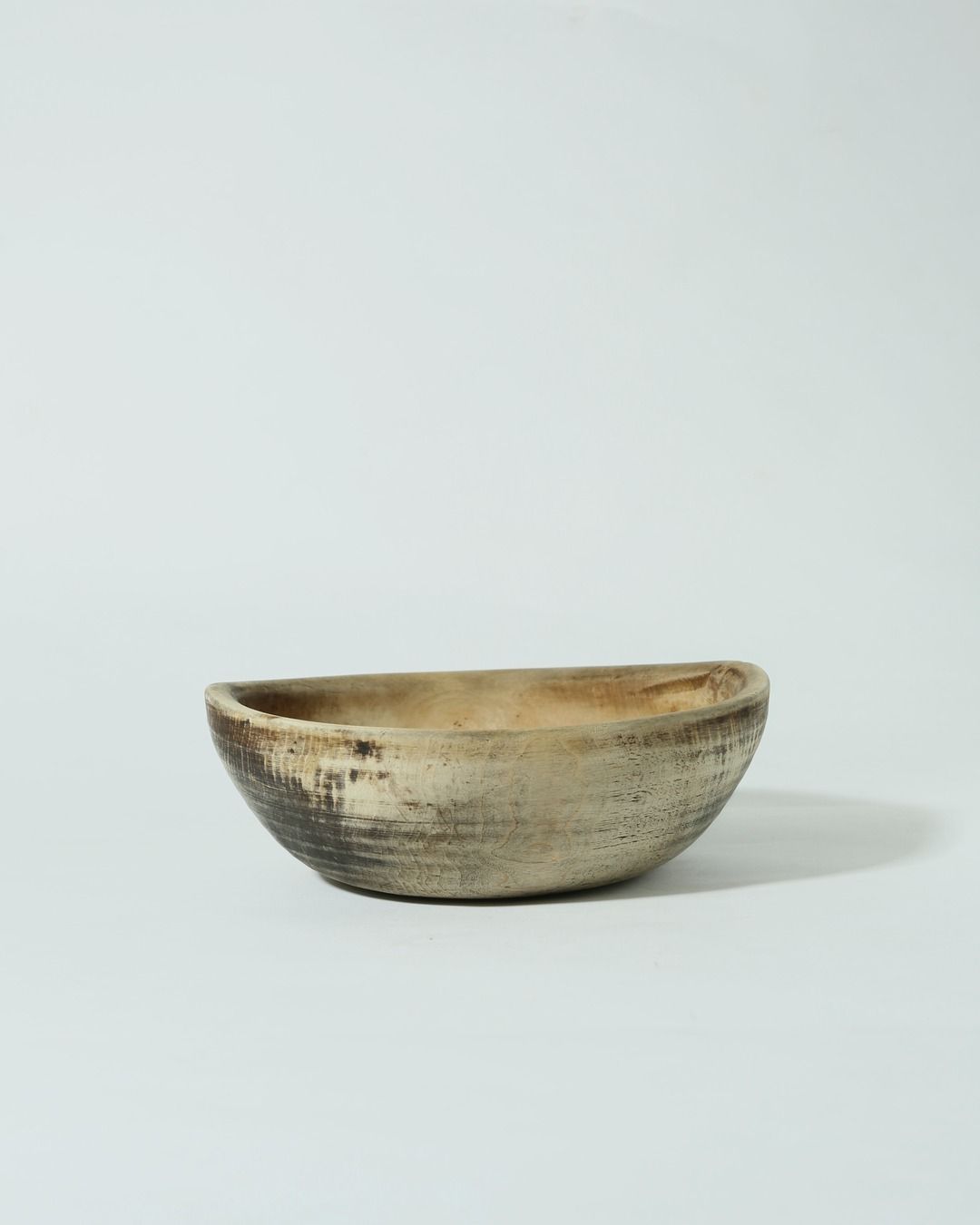
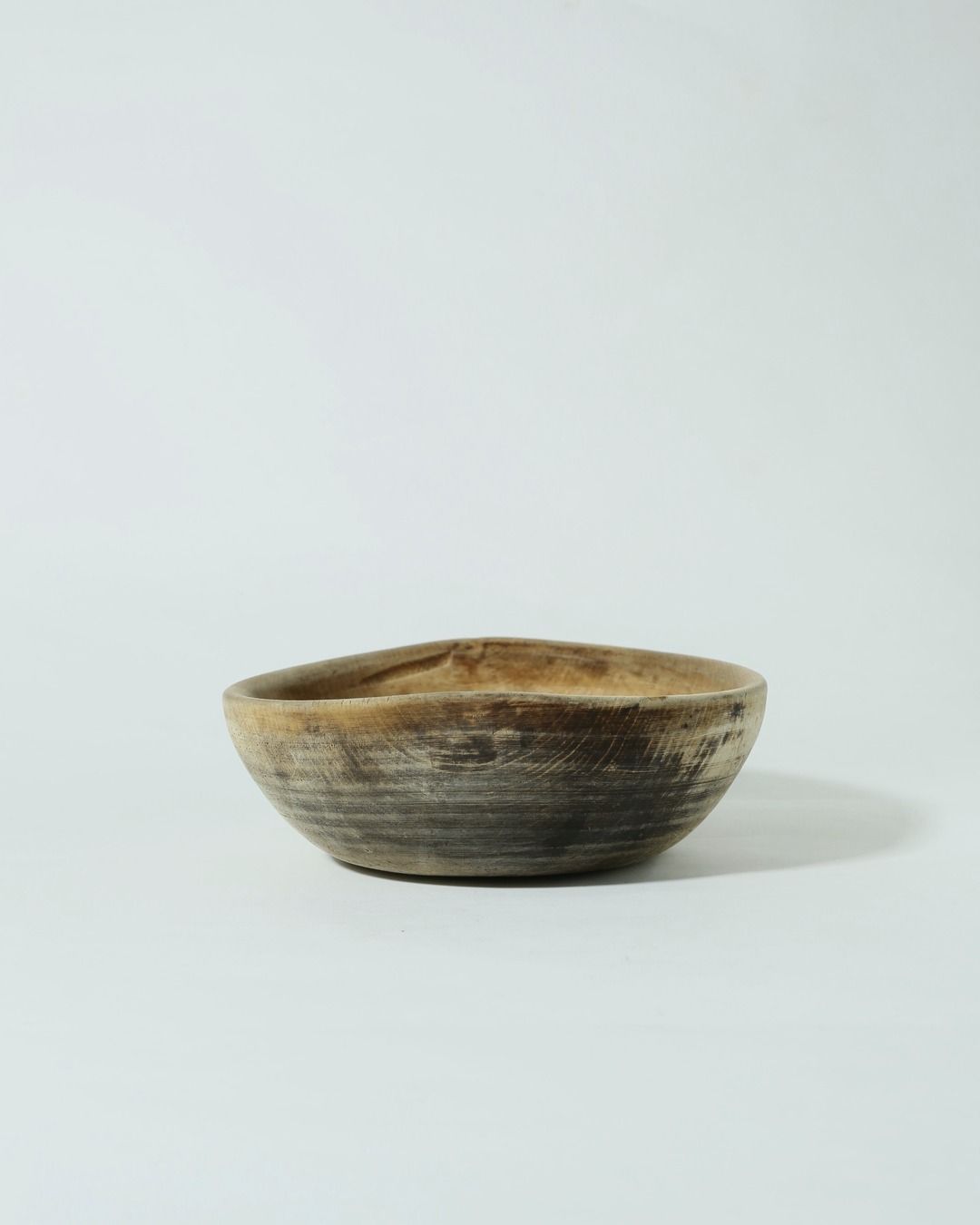
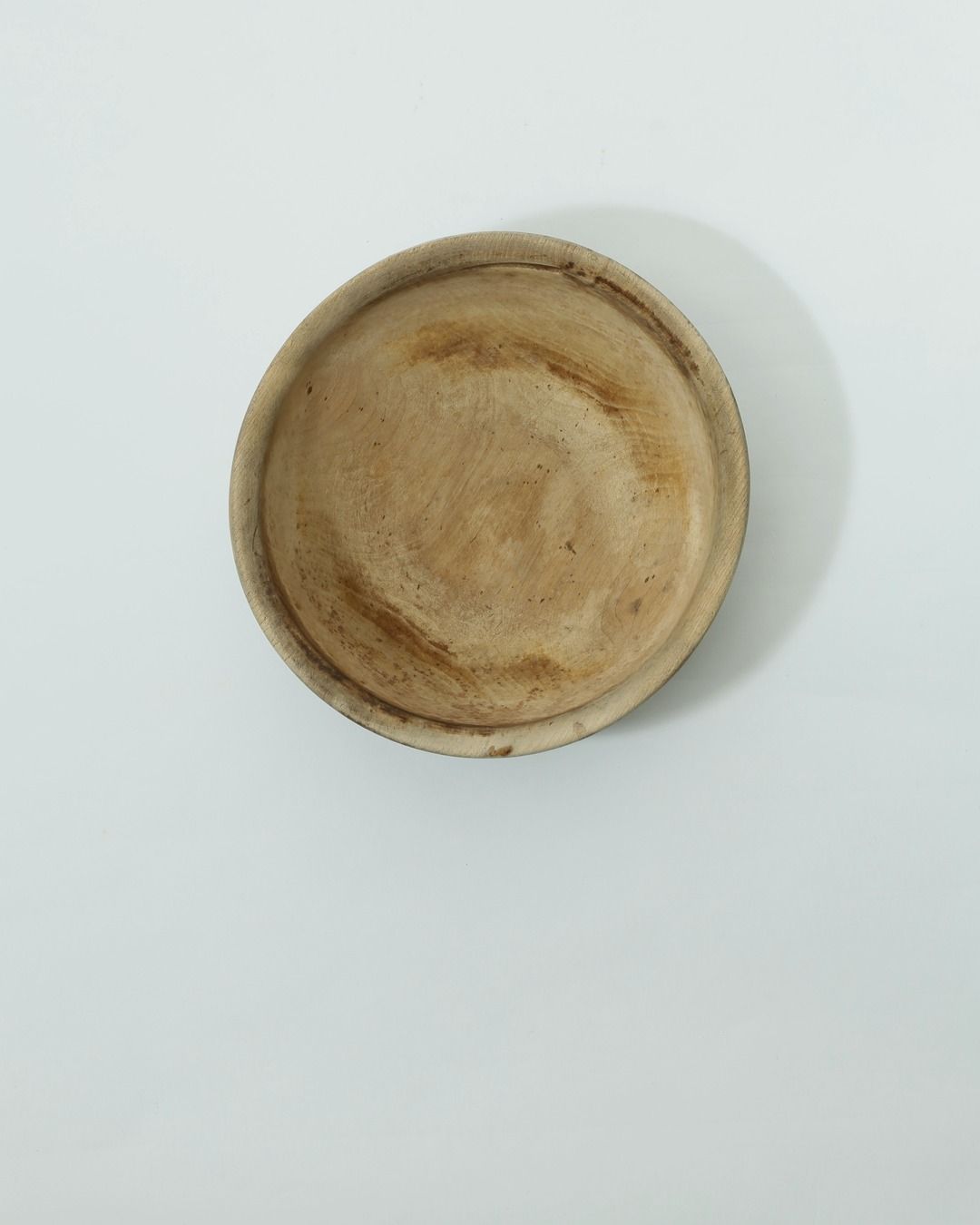
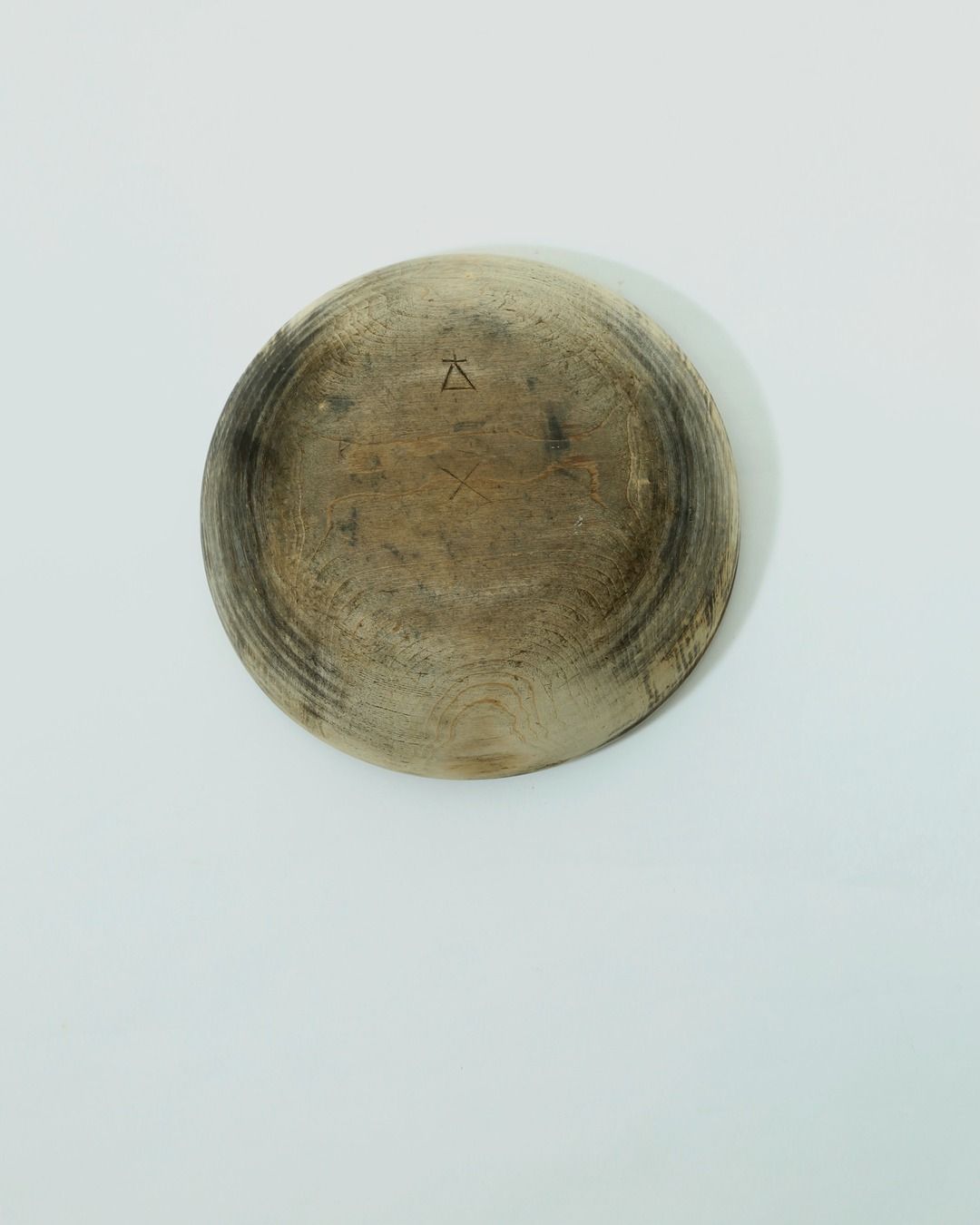
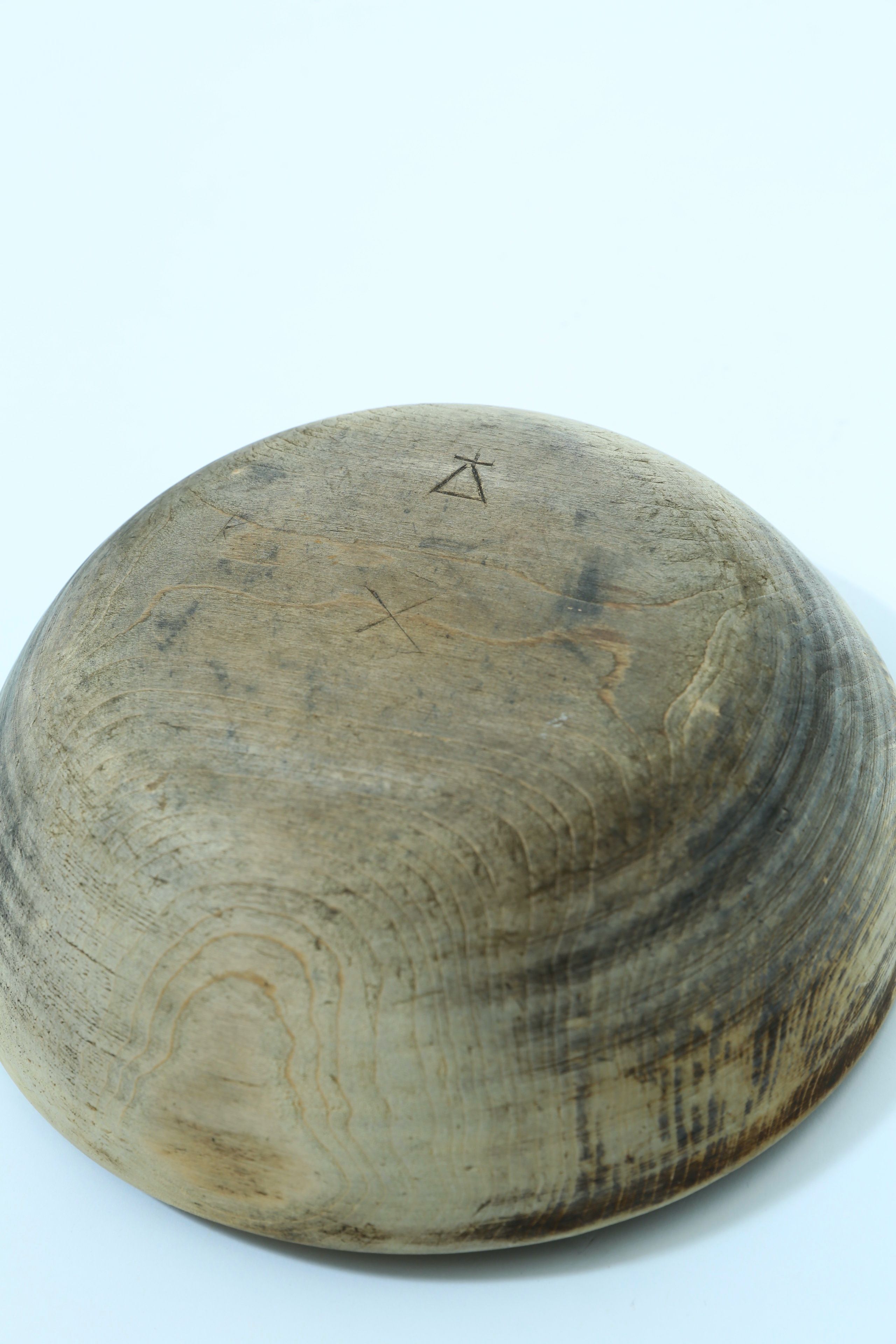
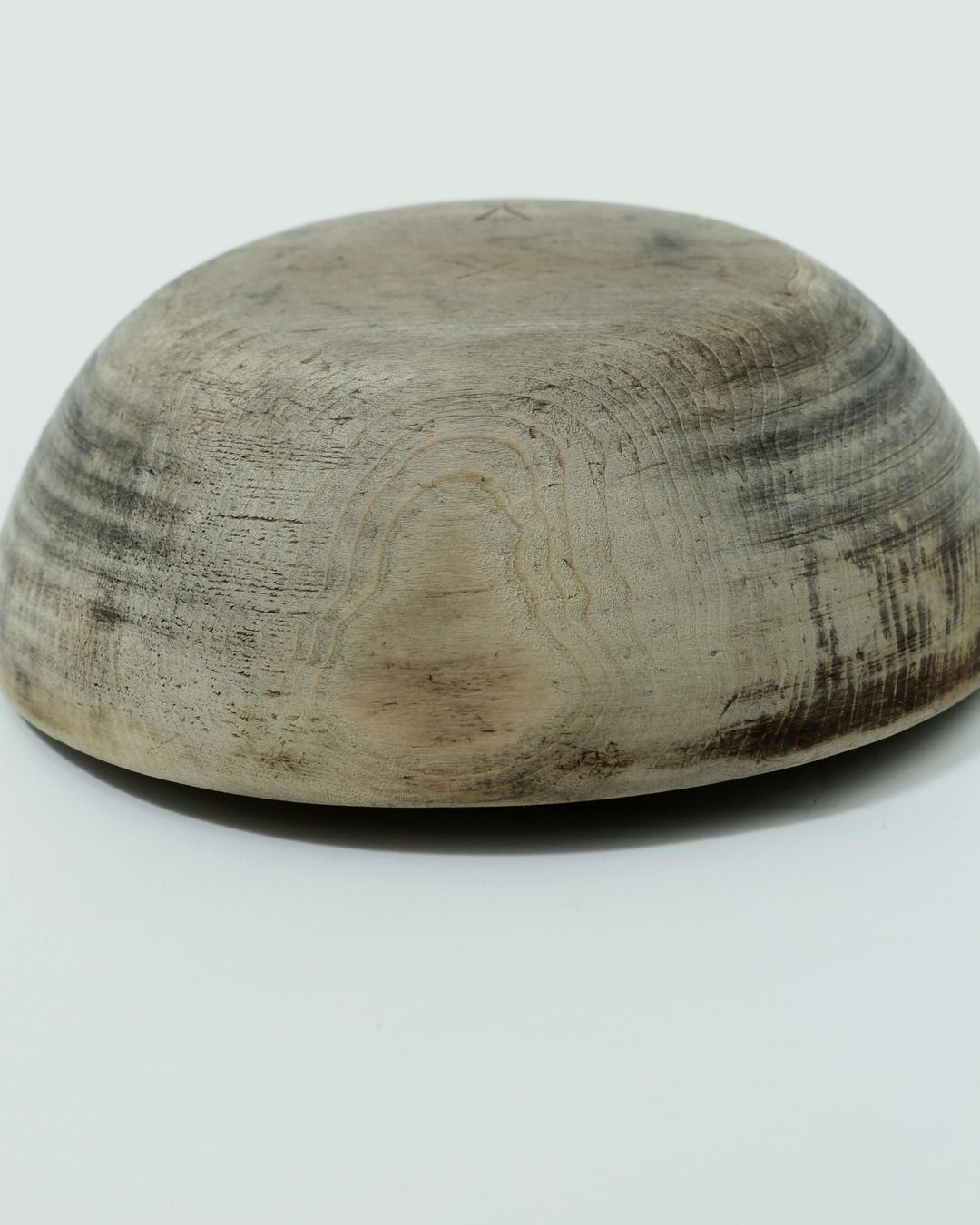
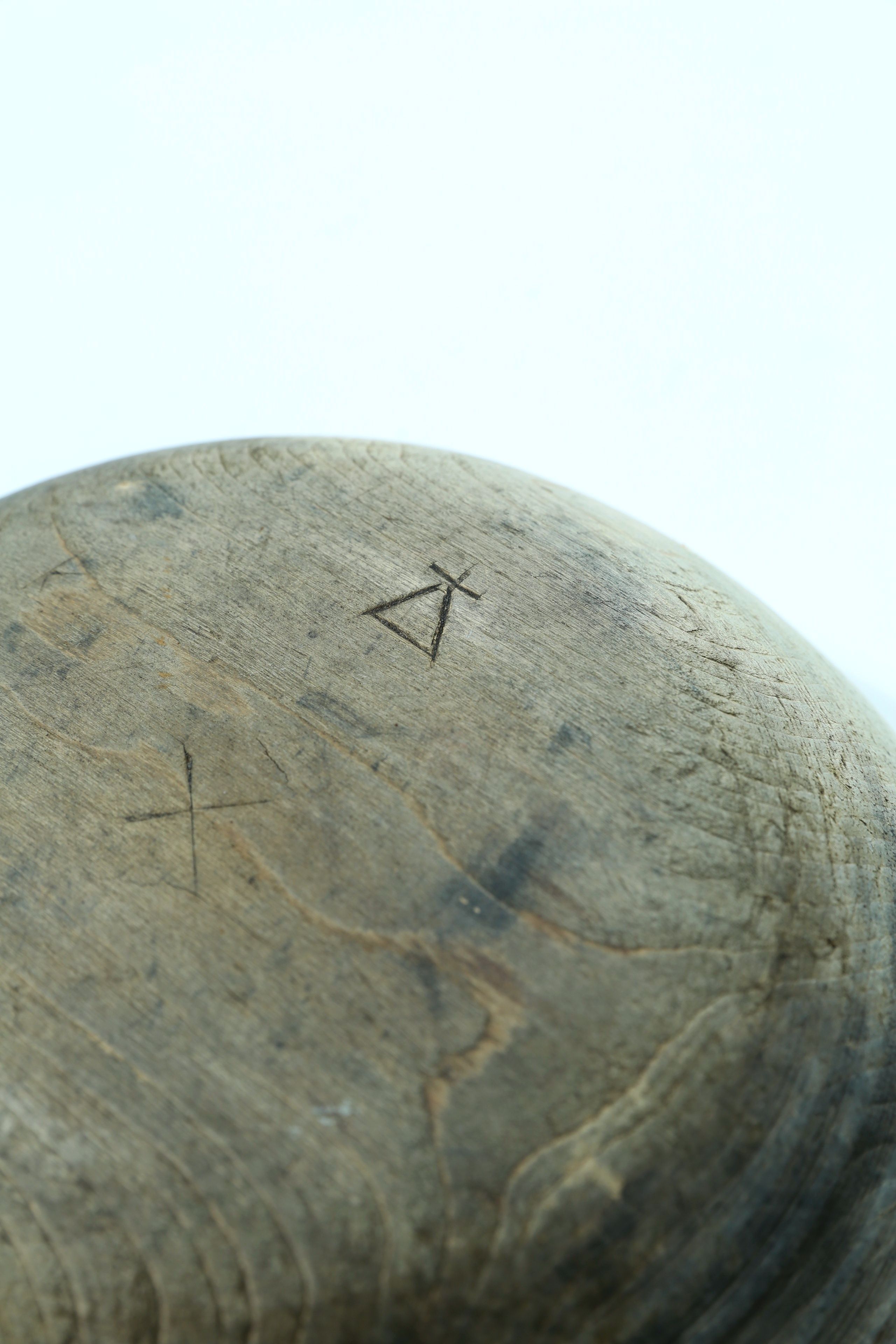
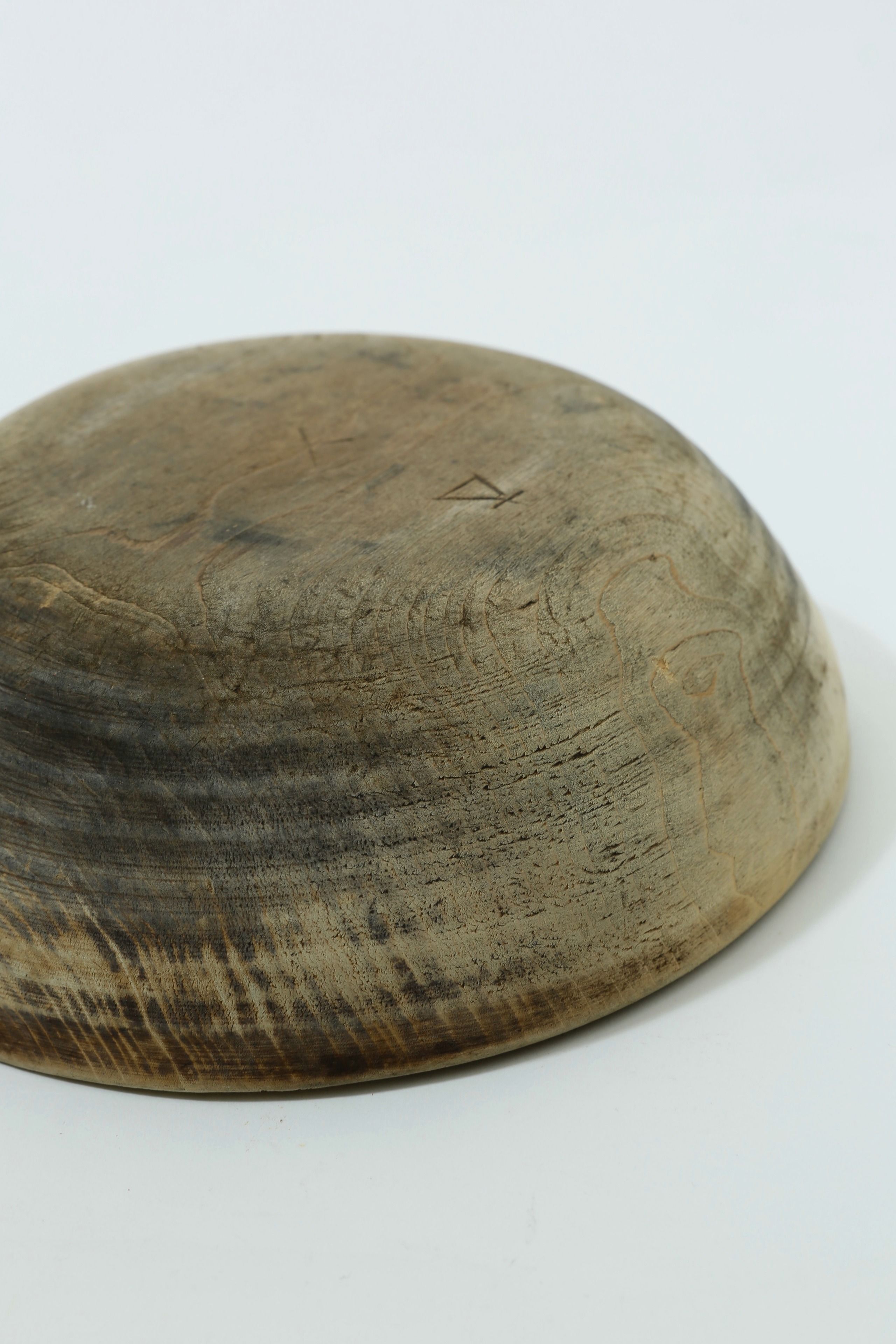
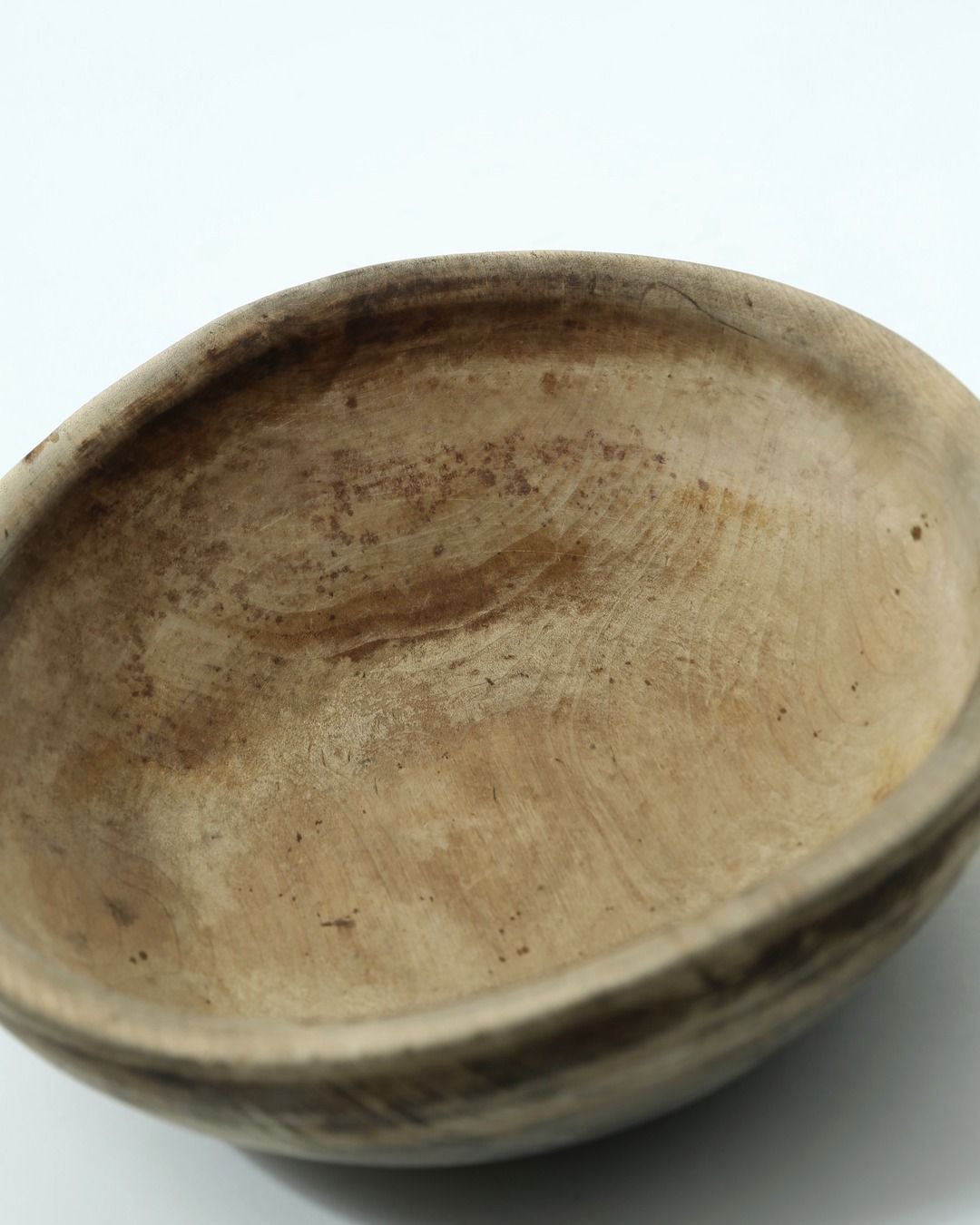
歪みのある楕円の縁と、厚みのある器形が印象的な木のボウル。底面には同心円状の挽き目がはっきりと残り、足踏み轆轤(ポールレース/トレドルレース)で挽かれた器であることがわかります。北欧の農村では、こうした足踏み式の簡素な轆轤が村の木地師によって使われ、日常の器が数多く作られていました。 現在の楕円形は、木が長い年月をかけて木理の方向に収縮したことで生じたもので、挽かれた当初は正円に近い形だったと考えられます。使い込まれるうちに生まれたこの歪みこそが、古い木の器ならではの表情です。底には所有者を示す家印(ボメルケ)と見られる刻みが二つ残り、共有の道具に持ち主を記す北欧の生活習慣を伝えています。 かつては北欧や英国の農家で、こね鉢やパン皿など日常の調理・食卓道具として広く用いられていました。スウェーデン、19世紀。
A wooden bowl with a warped oval rim and a substantial, thick-walled form. Concentric turning rings remain clearly visible across the underside, showing it was shaped on a treadle (or pole) lathe. Simple foot-powered lathes like these were used by village turners across rural Scandinavia to produce everyday vessels in quantity. Its present oval shape came about as the wood contracted along the grain over many years; when first turned it would have been close to a true circle. That gradual distortion is precisely what gives an old turned bowl its character. Two incised marks on the base appear to be a bomarke, a house or family mark used in Scandinavia to identify ownership of shared household objects. Bowls like this were once widely used on Scandinavian and British farms as everyday cooking and tableware -- for kneading dough or serving bread.Sweden, 19th century.