
紙・本
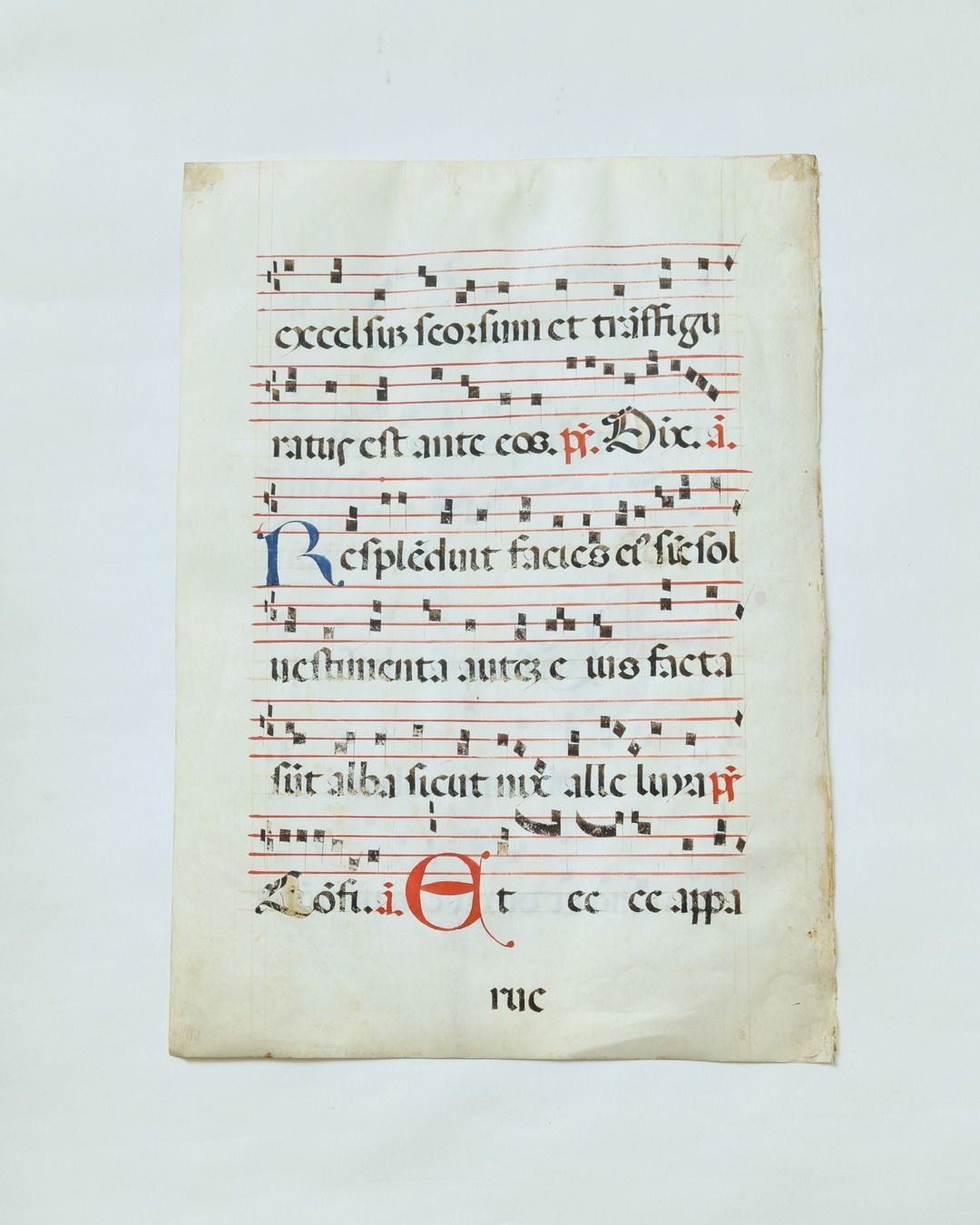
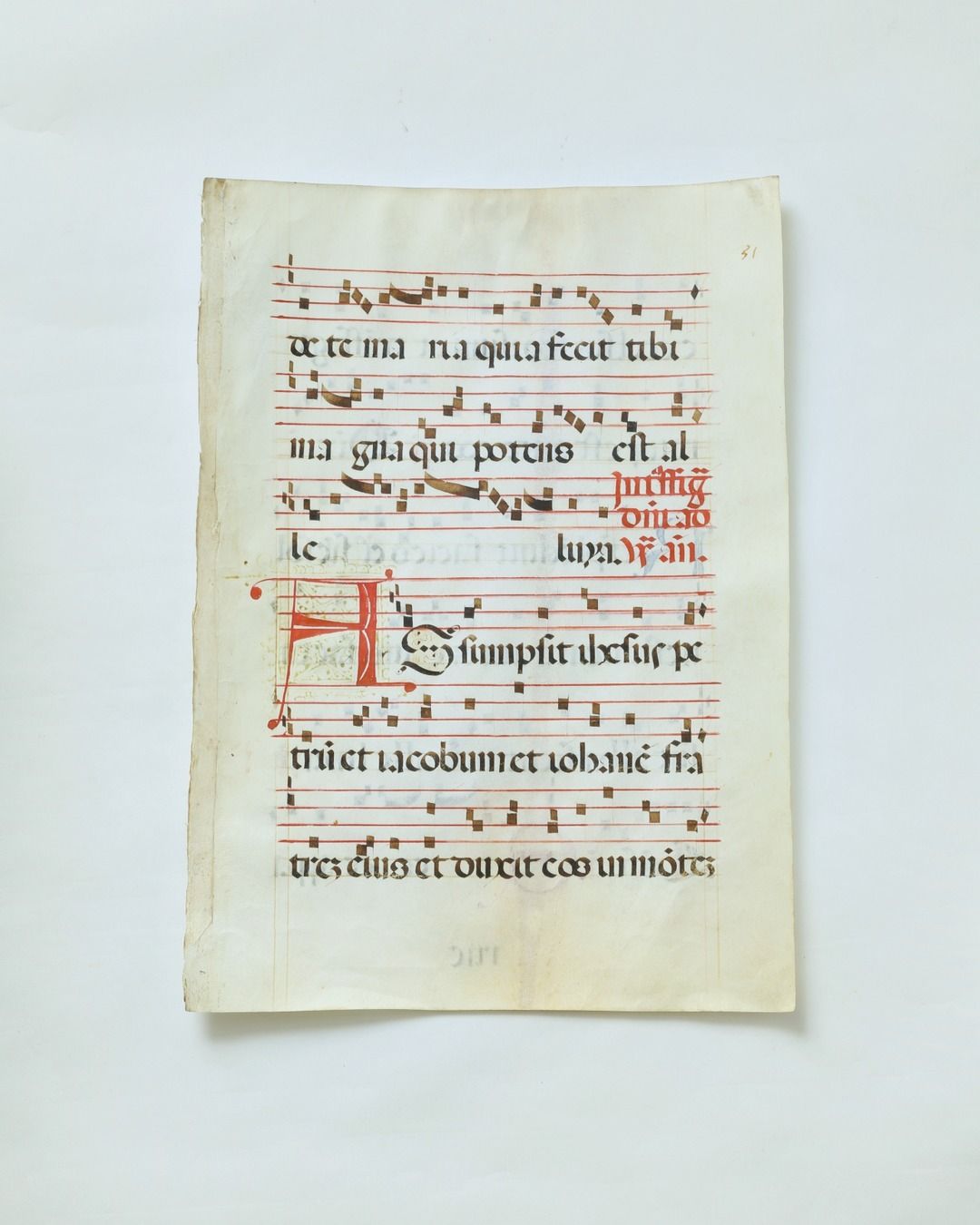
装飾写本零葉(ネウマ譜)
Italy / 15th–16th century
W31cm × L43.5cm
¥33,000 (税込)
Stock: 01
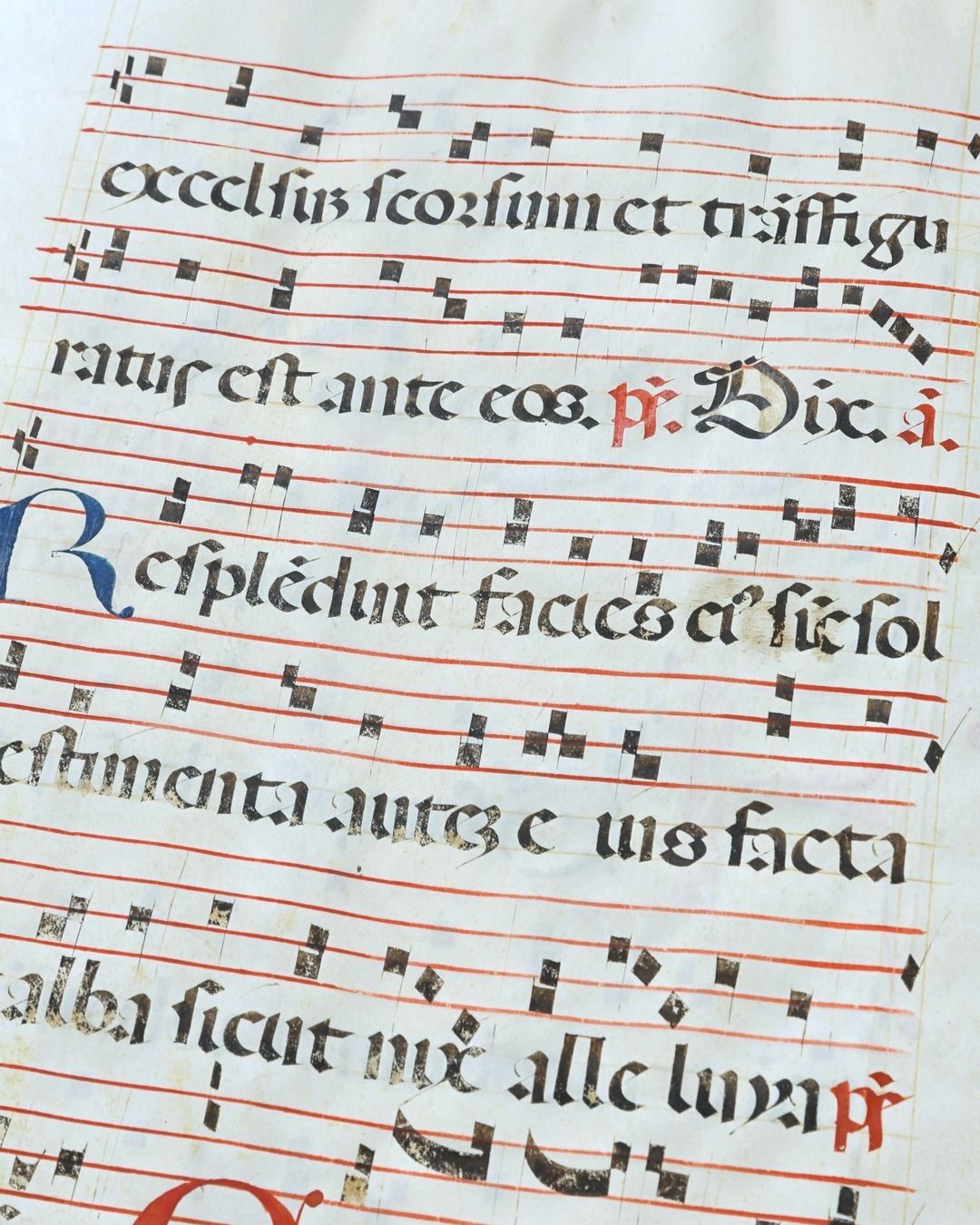
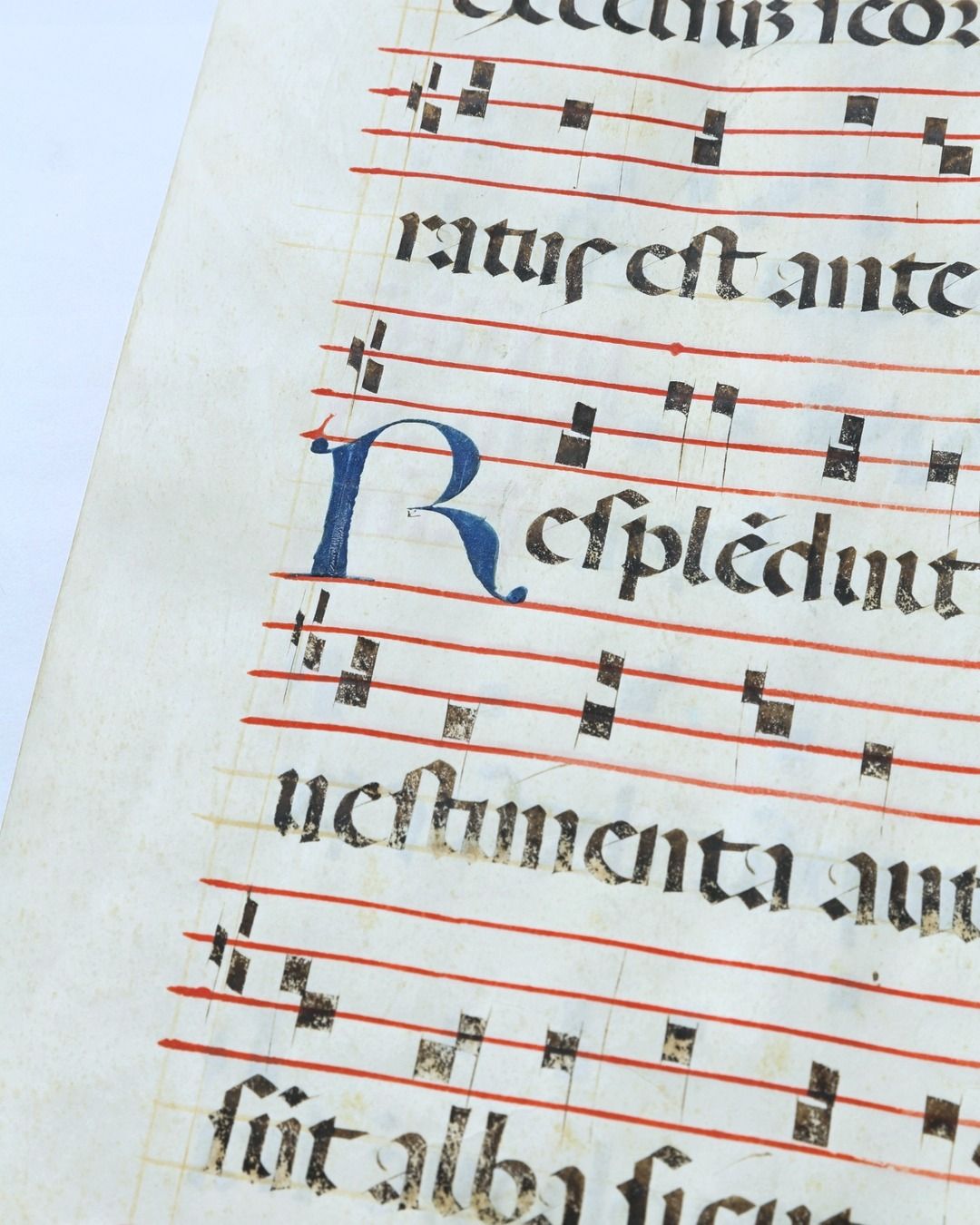
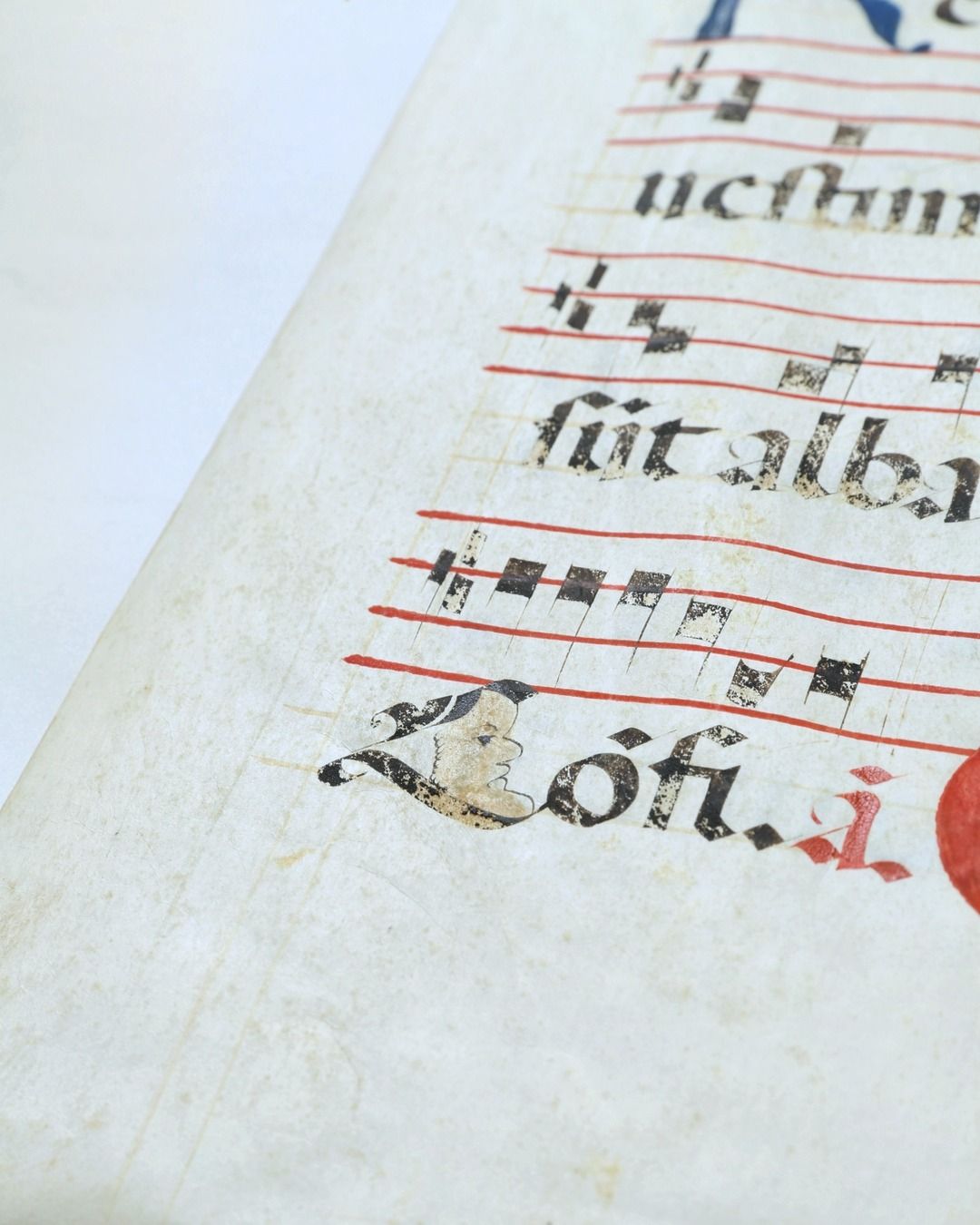
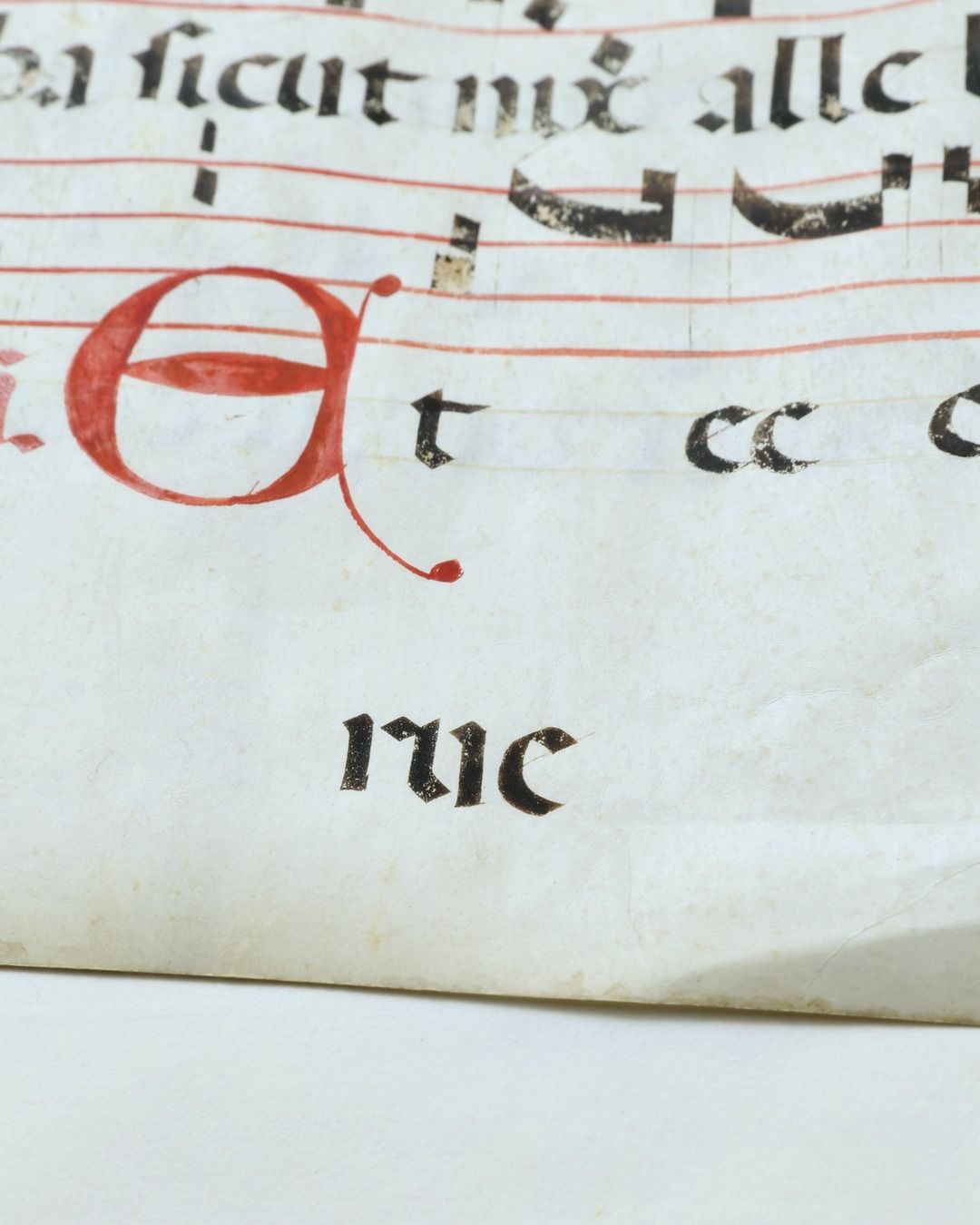
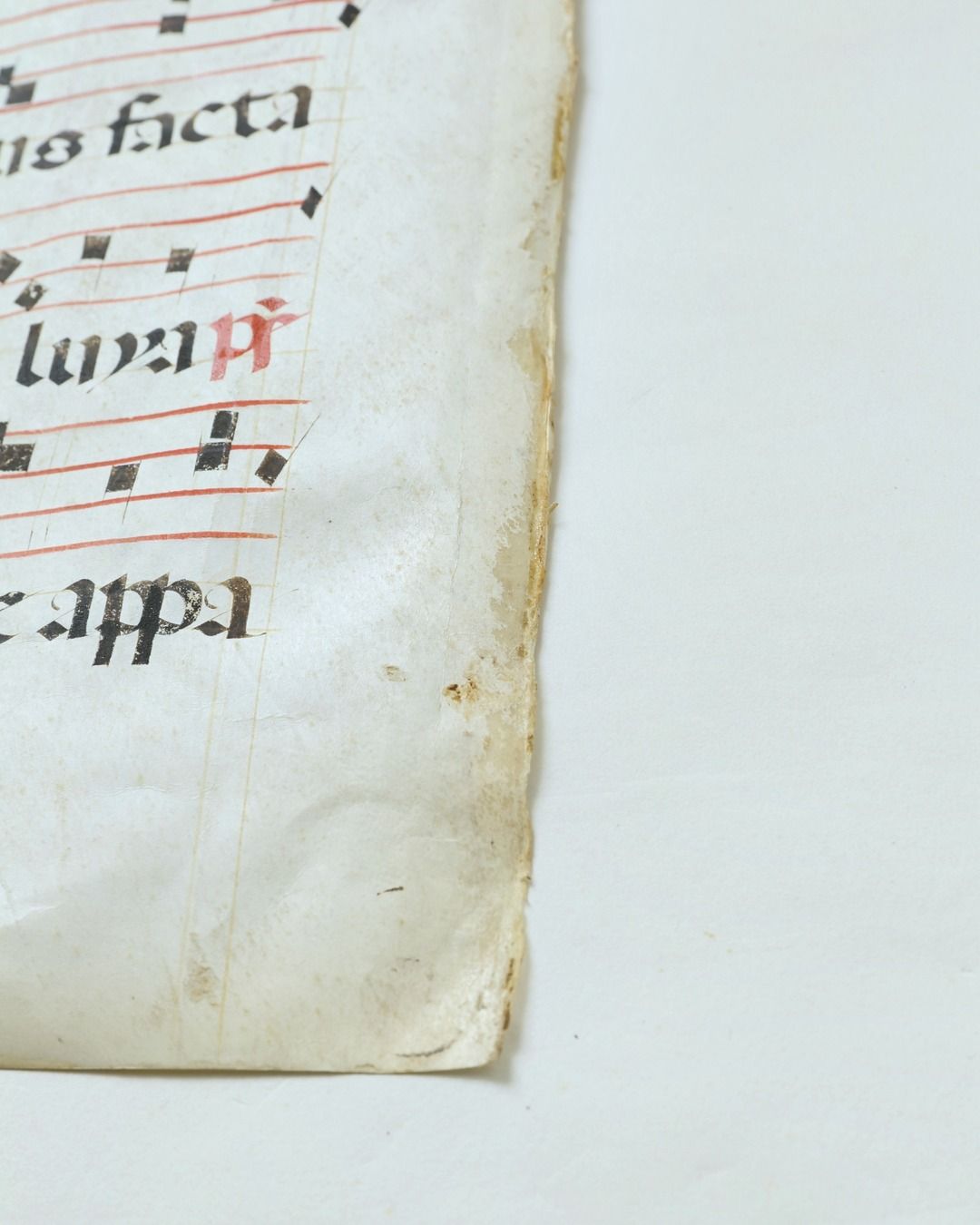
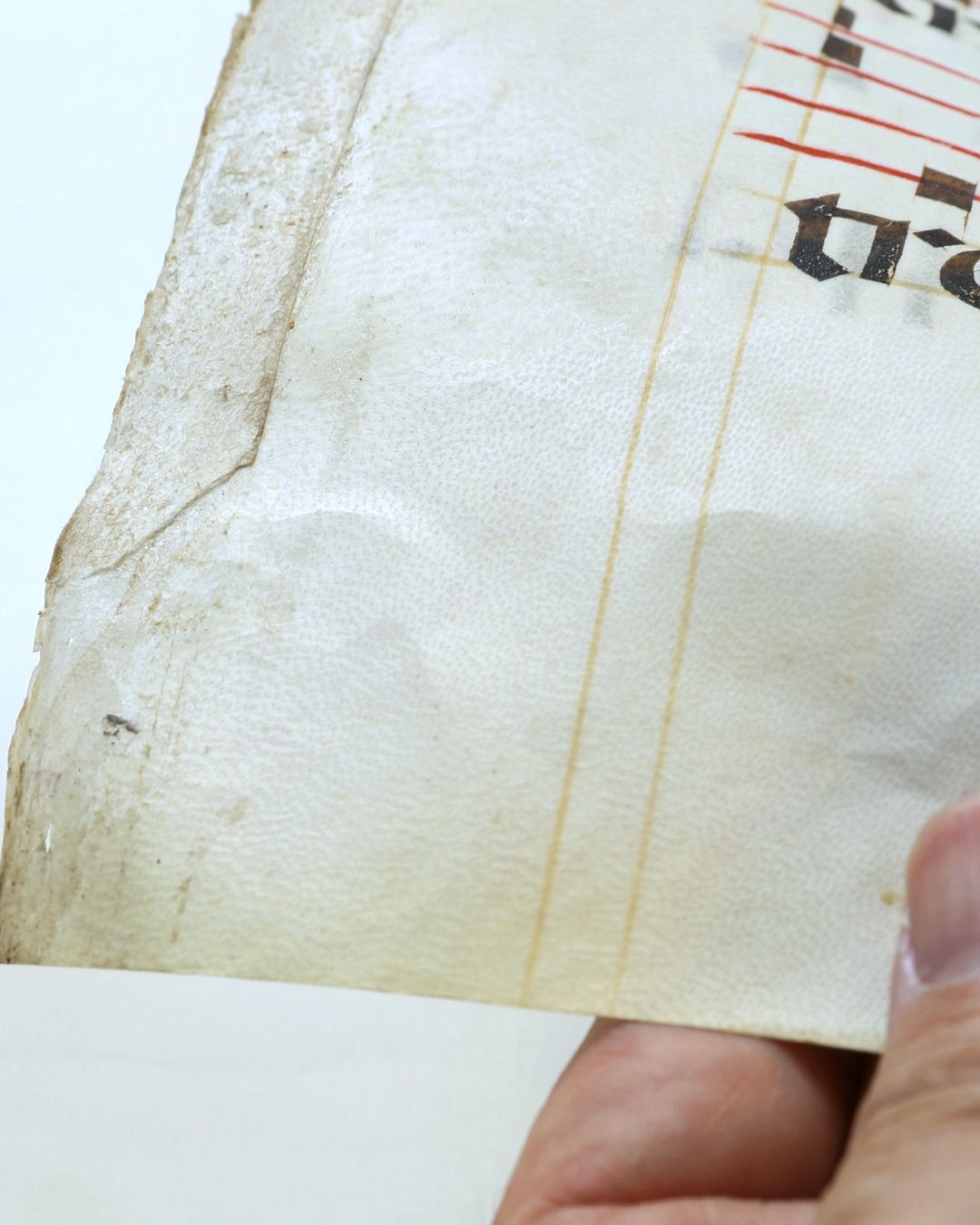
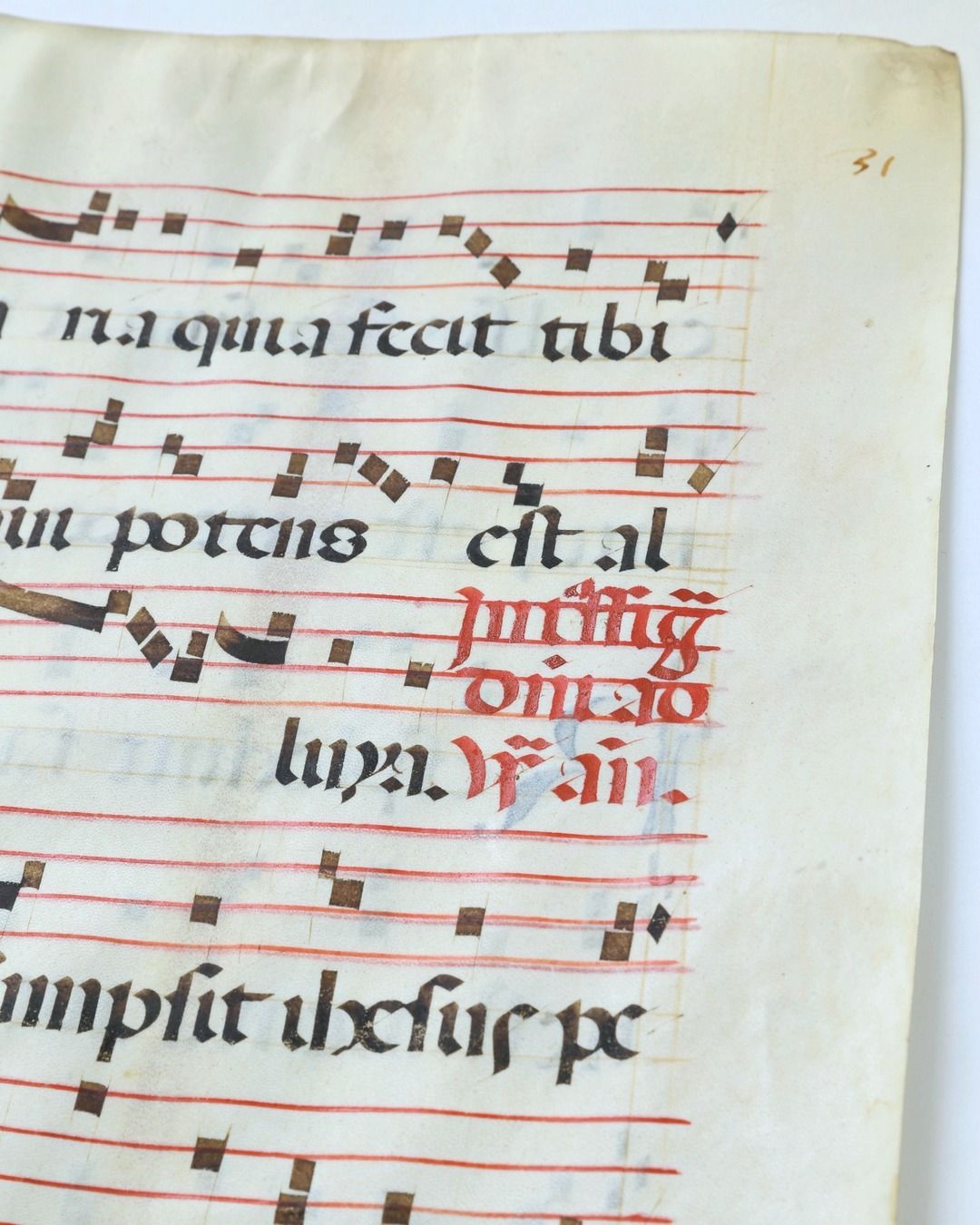
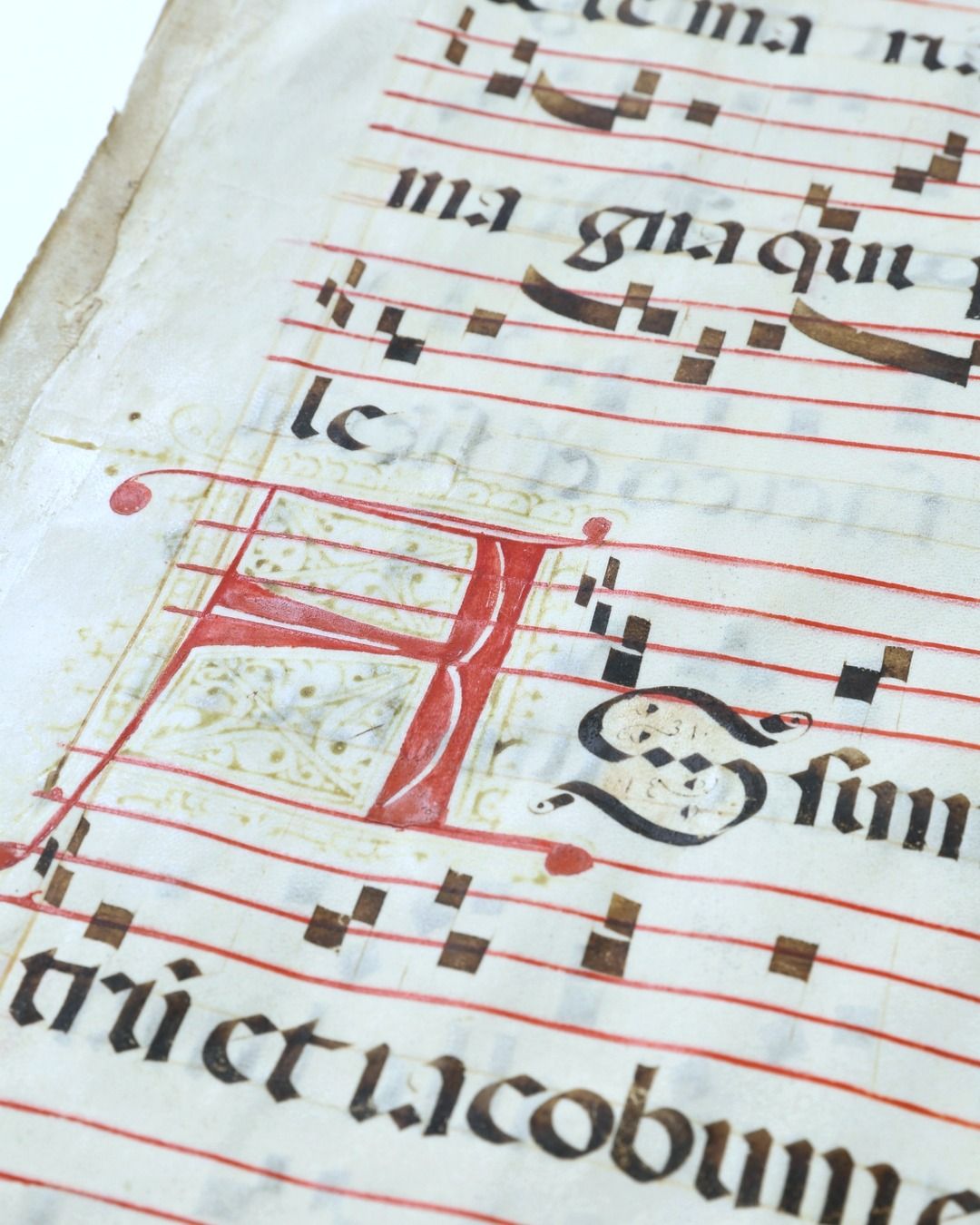
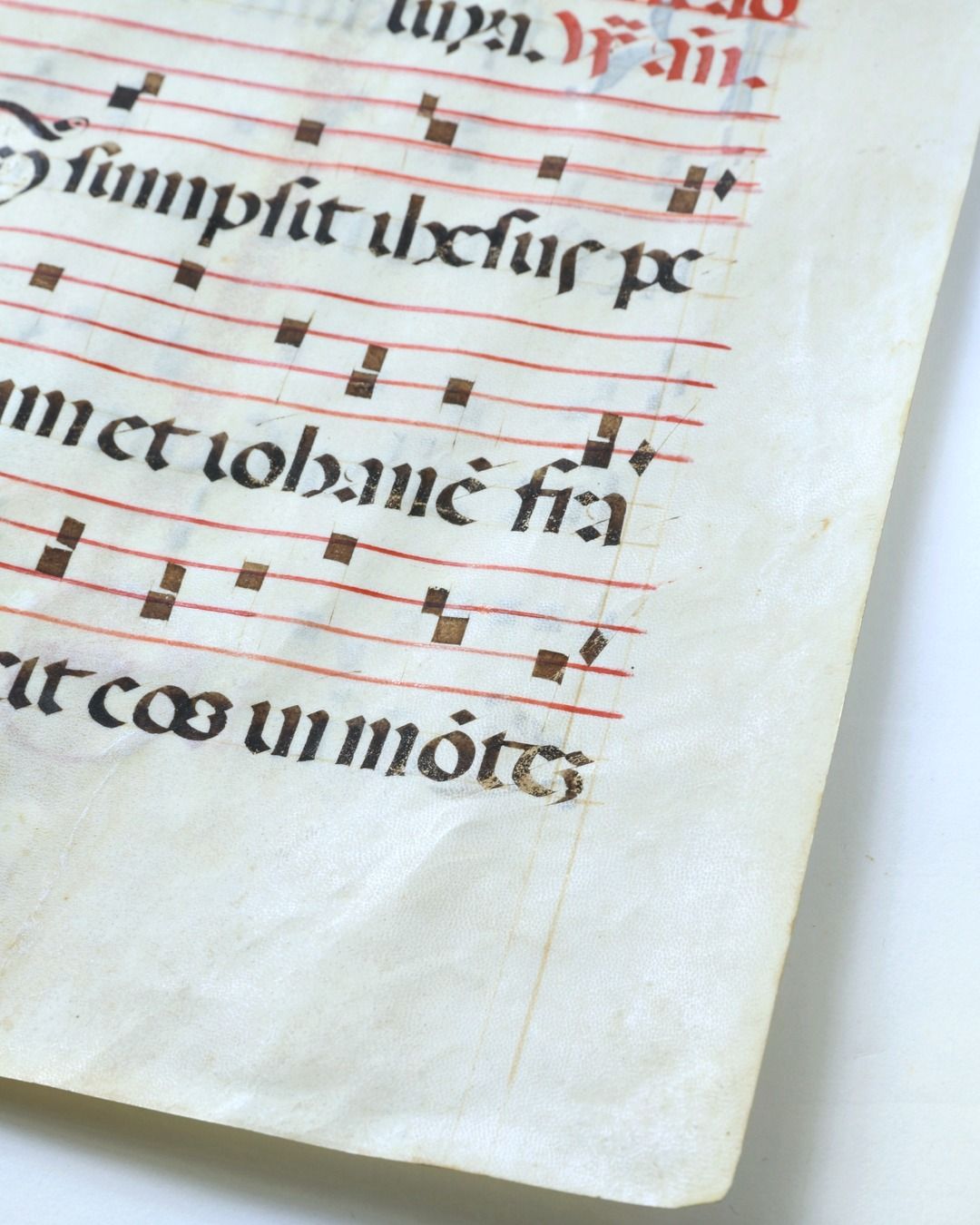
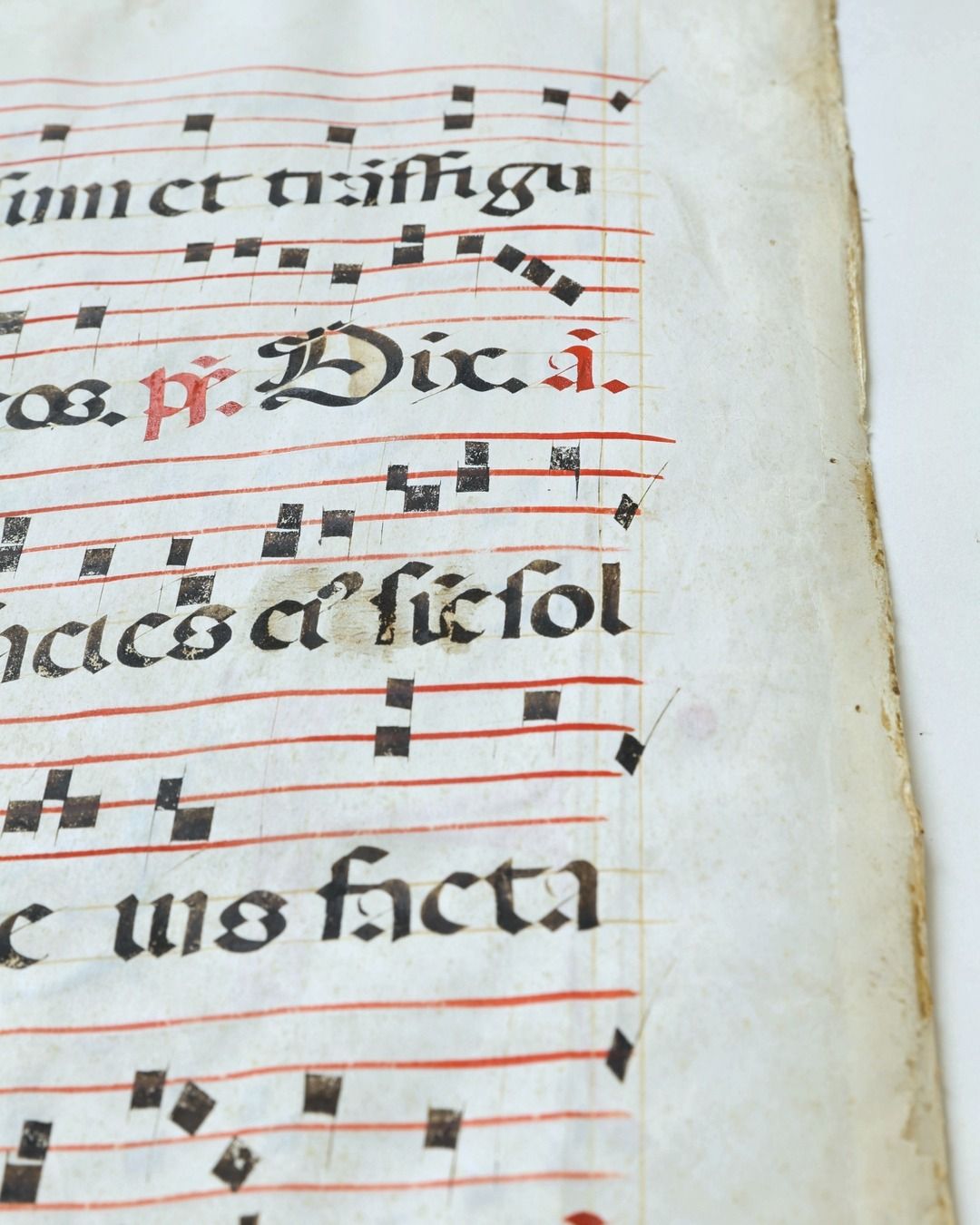
教会の聖歌隊で用いられた、大判の羊皮紙製アンティフォナリウム(聖歌集)の零葉。ネウマ譜は9〜10世紀頃に西欧で発達した最古期の記譜法の一つで、後の五線譜の直接の祖先にあたります。この零葉のような四線譜による定量的な音高の記譜は12世紀以降に整えられたもので、グレゴリオ聖歌がどのように伝承・教授されていたかを示す史料でもあります。 四線譜にネウマ譜が手書きされ、朱色や青色、金彩による装飾イニシャルが施されています。詩節や応唱の区切りを示すため、朱と青の頭文字を交互に配する彩飾の慣習(いわゆるロンバルド体イニシャル)が中世の聖歌集では広く用いられ、青色の顔料には藍銅鉱(アズライト)や藍がよく使われました。 遠目からでも歌い手が節の変わり目を素早く見つけられるようにする、実用性を兼ねた装飾でもあります。羊皮紙は一枚ごとに動物一頭分を要する高価な素材で、聖歌隊席の譜面台に置かれたこの種の大判本は、離れた場所からでも複数の歌い手が同時に読めるよう、あえて大きな文字と音符で書かれました。長年の使用による擦れや染みも、写本としての来歴を物語ります。イタリア、15〜16世紀。
A leaf from a large-format vellum antiphonary, once used by a church choir. Neume notation is one of the earliest systems of musical notation to develop in Western Europe, emerging around the 9th–10th century as a direct ancestor of modern staff notation. The four-line staff seen here, which fixes pitch more precisely, became standardized from the 12th century onward, making leaves like this a record of how Gregorian chant was transmitted and taught. Neume notation is hand-drawn on the four-line staff, with decorated initials in red, blue, and gilt. Medieval choir books widely followed the convention of alternating red and blue initials (so-called Lombard capitals) to mark the start of each verse or response, with the blue pigment typically ground from azurite or indigo — a decorative practice that doubled as a practical aid, letting singers quickly spot where a new line began from across the choir stall. Vellum required roughly one hide per leaf and was an expensive material; large choir antiphonaries like the one this leaf came from were placed on a lectern at the choir stall and deliberately written in oversized letters and notes so several singers could read them at once from a distance. The wear and staining from years of use speak to its history as a working manuscript. Italy, 15th–16th century.